- Share
-

-

-

-

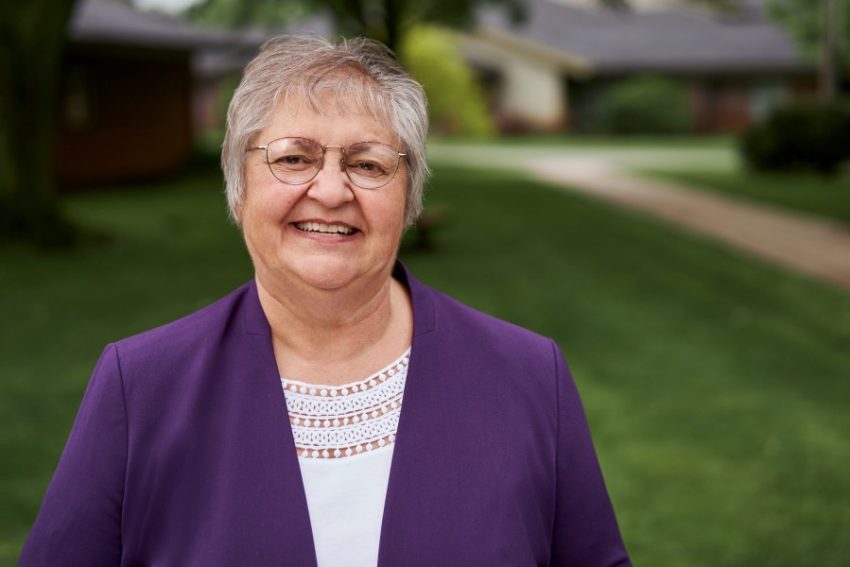
Each year at NatCon, we honor leaders whose vision and dedication have advanced mental health and substance use treatment and care. Among the highest distinctions is the Lifetime Achievement Award, recognizing individuals whose work has shaped the field. This year, we’re proud to recognize Bonita Schrock, who recently retired as chief clinical officer of Oaklawn, a Certified Community Behavioral Health Clinic (CCBHC) and National Council member organization in northern Indiana. We asked Schrock to reflect on her remarkable career, the lessons she’s learned along the way and the future of behavioral health care.
Looking back on your career, what fills you with the most gratitude?
“There are so many things that fill me with gratitude. To name just one, I would highlight the generosity of others in teaching me important values, skills and methods.
“That includes clients who spoke plainly and offered wisdom that changed me. Supervisors and mentors who guided me, taught me and supported me when I felt wobbly. Supervisees who challenged me, brought new insights and represented the growth of the field, which is so inspiring to witness.
“I’m also grateful for community partners whose differing perspectives taught me the value of dialectical thinking in this work, and for coworkers who served with deep commitment to the mission and earned my admiration.
“And of course, events like NatCon, where I could periodically immerse myself in new ideas and emerging practices before returning to the trenches inspired, energized and fueled with optimism to continue what I truly see as very sacred work.”
Is there a moment in your career that deeply shaped how you view community mental health today?
“Quite a number of years ago, after a particularly difficult period when the tragedies in our community seemed to run together with little space between them, I remember lamenting the circumstances, systems and lack of fairness that had created these situations. I was so aware that sometimes our best efforts cannot prevent the violence, poverty, illness or unfairness of our world.
“It was then that I was struck by the image of community mental health as a basin into which the pain of a community is often poured. As we hear the stories and walk with those who suffer, we provide a holding environment that serves as a steady foundation for our community and our clients. Holding that pain can become a powerful force for change in a community.
“I try not to underestimate the presence of our work in a community, even when things seem to be moving in a different direction than I might wish. Knowing that people doing this work — community mental health providers and organizations — are present in communities across the country gives me encouragement.”
What are some important lessons you’ve learned along the way?
“There have been two great lessons that I have learned and sometimes needed to relearn. The first is that it takes a team. We are so much better together than we are individually. The gifts and strengths that emerge when we work together can scale heights that once seemed impossible. It also meant that I didn’t have to feel alone in this work, for which I was incredibly grateful. It has been a privilege to spend my life working with others who understand why this work matters.
“The second lesson was to truly believe in and rely on the adage ‘trust the process.’ Before becoming an administrator, I was a therapist, and I often used my clinical perspective to guide my organizational and community work. Trusting the process became a lifelong mantra. When answers were not clear, when resources were scarce and when hope seemed diminished, there was still the team and the process. That process guided us through more than a few challenges along the journey.”
If you could return to your first day at work, what would you tell yourself?
“I think of Dr. Seuss’ ‘Oh, the Places You’ll Go,’ with an expanded message:
Oh, the experiences you will have.
Oh, the new viewpoints you will see.
Oh, the depth you will explore.
Oh, the lessons you will learn.
Oh, the systems you will challenge.
Oh, the healing you will witness.
Oh, the relationships you will develop.
Oh, the change that you will see.
“And in the end: ‘Oh, the gratitude that will well up within you for the privilege of being part of this great work. Do not be afraid — get going on your amazing journey.’ ”
What does winning the Lifetime Achievement Award mean to you?
“I wasn’t aware that I had been nominated for this award. Not only was I surprised, but I was also speechless when I received a call from Chuck Ingoglia, the National Council’s president and CEO, telling me I had been chosen as one of the recipients of the Lifetime Achievement Award.
“For a couple of weeks, I walked around thinking there must have been a mistake; that there were so many other people more worthy and who had done greater things.
“But then my daughter, who is also a CCBHC social worker, said to me, ‘Mom, maybe they wanted to recognize someone who simply got up, went to work every day of their career committed to the mission and did their best to increase the quality of care, broaden the continuum of care and make a difference in their community.’
“At that point, I thought: There are hundreds — even thousands — of people just like me who will be at NatCon this April. People who head out the door each day to what sometimes seems like unglamorous work. People who have done it for years and who are committed to doing it for years to come. People who have changed things for individuals, organizations and communities.
“So for me, receiving this Lifetime Achievement Award is in the name of all of us: Those of us who believe strongly in this great work. Those of us who grow tired and discouraged but continue in spite of it. Those of us who have been touched and changed as people and practitioners, and who, in turn, have helped create the conditions for other people and systems to change as well. Many thanks and congratulations to all of us!
“And for those of you who are not yet at the end of your careers like I am, keep on keeping on. It is truly a life-changing journey.”