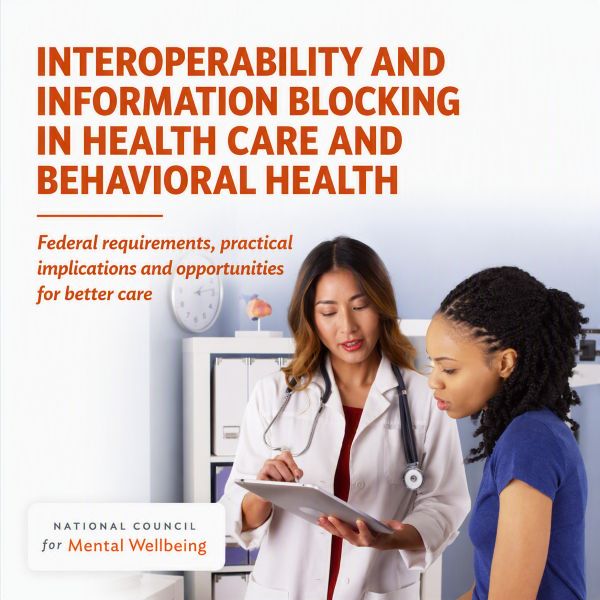
Interoperability and Information Blocking in Health Care and Behavioral Health
- Share
-

-

-

-

When Every Minute Counts, Does Your Team Have the Information It Needs?
Crisis clinicians often meet patients for the first time at the worst moment of their lives — with almost no clinical history to go on. A missing medication list. An unknown allergy. No record of a prior suicide attempt or psychiatric hospitalization. In crisis care, these gaps aren’t just inconvenient. They can be dangerous.
The good news: federal law has changed to close them.
A New Rulebook for Sharing Health Information
Over the past several years, HIPAA, 42 CFR Part 2 and the ONC/CMS interoperability and information blocking regulations have been significantly updated, and together, they’ve shifted the default. Health care organizations are no longer just permitted to share patient information for treatment. In most cases, they’re now required to, and refusing to do so without a valid legal reason can be treated as prohibited ”information blocking.”
Yet many provider organizations haven’t caught up. Policies are outdated. Consent forms haven’t been revised. Staff haven’t been trained on what’s changed. The result: patients and crisis providers are still hitting walls that the law no longer requires.
What’s Inside This Free Resource
The National Council for Mental Wellbeing’s Medical Director Institute has published a practical brief that cuts through the legal complexity and tells you what actually matters for your organization:
- What counts as electronic health information and why it’s much broader than billing data, extending to progress notes, discharge summaries and most therapy documentation.
- The narrow exceptions that still apply, including exactly what’s required for a valid patient privacy opt-out, and the very limited psychotherapy-notes exemption.
- What ”information blocking” actually means under federal rules, and which organizations and providers are covered.
- The penalties and disincentives organizations risk for noncompliance, from Medicare payment reductions to public posting of violations.
- Why this is a clinical opportunity, not just a compliance task, and how timely information sharing improves safety, continuity of care, and outcomes, especially in crisis and after-hours settings.
Why Download It
If your organization touches crisis services, emergency care or behavioral health — or hands off patients to teams who do — this brief gives you a clear, non-legal-jargon starting point for a conversation your compliance and clinical leadership need to be having right now. It won’t replace your legal counsel, but it will help you ask the right questions and identify where your current policies may be falling behind the law.
The National Council Medical Director Institute (MDI) is a leadership group of board-certified psychiatrists and medical directors who advise on best practices and standards of care for mental health and substance use disorders. Established in 2015, MDI members bring expertise from their roles overseeing behavioral health service delivery across member organizations. Learn more.