From the CEO: Food Is Medicine — The Connection Between Diet and Wellbeing
- Share
-

-

-

-

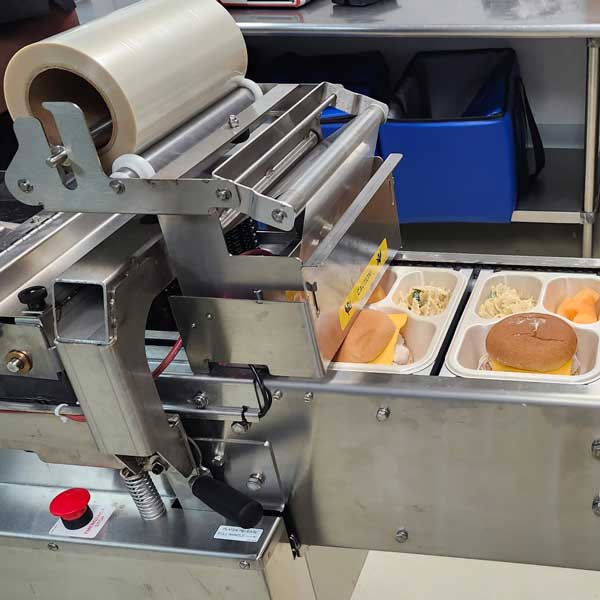
National Council for Mental Wellbeing member HealthPort will begin a long-planned program this month to provide prepared, frozen meals for more than 600 clients in and around Salisbury, Maryland.
The program represents the latest example of a rapidly growing trend: the food-is-medicine movement.
“This is one of the most important interventions we’re doing,” HealthPort President and CEO Dimitrios Cavathas told me recently. “We’re really excited.”
HealthPort’s initiative is an opportunity to shed light on the importance of providing food for people with a mental health or substance use challenge and why a healthy diet is just as important for one’s mental health as it is for physical health.
“This is about addressing whole person health,” Cavathas said.
There is a growing understanding about the connection between food and wellbeing. And there’s growing enthusiasm – at the local, state and federal levels – to do more.
What is the Food-Is-Medicine Movement?
“Food isn’t just something on your plate,” Dr. Mehmet Oz, administrator of the Centers for Medicare and Medicaid Services, said following his remarks at the Food is Medicine Conference in Washington, D.C. in June. “Food is medicine.”
But what does that mean?
Interest in food-is-medicine approaches – programs such as medically tailored meals, medically tailored groceries and produce prescriptions – has grown rapidly in recent years as research continues to link diet quality with major chronic diseases, according to researchers at Tufts University.
What’s taken longer to understand is the connection between food and mental wellbeing, but it is increasingly evident that the connection is real. That’s because at the most fundamental level, it’s generally agreed upon that good physical health contributes to good mental health.
The American Psychological Association posted a fascinating article earlier this year that delves deeper into that relationship, We Are What We Eat.
“Growing evidence suggests that what we eat influences not just our physical health but also our mood, emotions, and overall well-being. Dietary changes such as reducing ultra-processed food intake and eating more fruits and vegetables, as well as taking certain nutritional supplements, have been associated with improvements in depression and other mental health problems in adults and with a healthier start to life for children,” the author wrote.
HealthPort’s Innovative Program
With its innovative new program, HealthPort’s goal includes overcoming food insecurity and promoting overall wellbeing among its clients on Maryland’s Eastern Shore.
“Too many people have gas station diets,” Cavathas said. “We have to address that.”
HealthPort’s program has been in development for years, going through a few iterations as the team learned valuable lessons about everything from food distribution to the eating habits of its clients. A patchwork of funding has gotten the clinic, which is a Certified Community Behavioral Health Clinic, to a point where its program will break even, and a potential new funding stream may prove to be a difference maker. Cavathas was encouraged when he noticed that a Notice of Funding Opportunity issued by the Substance Abuse and Mental Health Services Administration in June indicated that “food is an allowable expense.”