How One Coach Is Changing States’ Mental Health Policies
- Share
-

-

-

-






Coaches are often among the most trusted adults in a young person’s life. They see athletes through wins and losses, tough practices, changing friendships and the everyday pressures that come with growing up. That proximity creates an opportunity — and a responsibility — to recognize when a student athlete may need support.
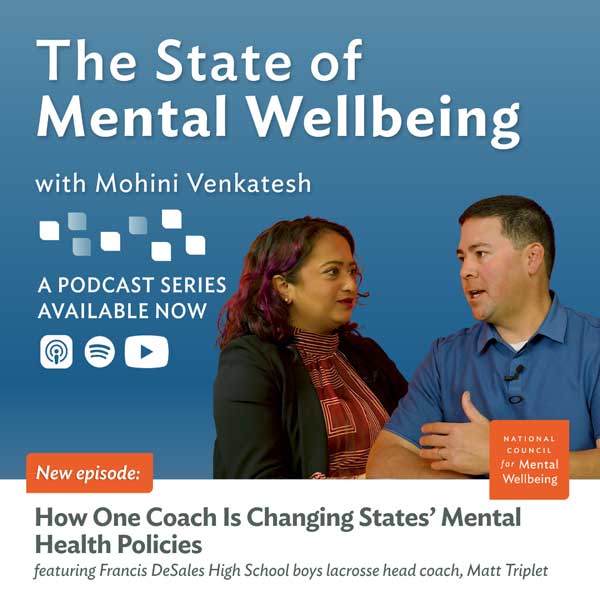
In a recent episode of The State of Mental Wellbeing, host Mohini Venkatesh spoke with Ohio lacrosse coach and mental health advocate Matt Triplet about how one player’s crisis transformed his approach to coaching and set him on a path toward statewide policy change. His story offers practical lessons for coaches, parents, educators and advocates working to strengthen youth mental health and create safer sports environments.
What You’ll Learn
Listeners will come away with a clearer understanding of:
- How coaches can build trust and emotional safety with young athletes
- Why mental health training helps coaches recognize warning signs and respond appropriately
- What Mental Health First Aid (MHFA) can offer adults who support student athletes
- How Ohio added mental health training to coach certification
- How personal experiences can grow into grassroots advocacy and policy change
The Role of Coaches in Student Athlete Mental Health
Triplet has coached high school lacrosse for nearly two decades. Early in his career, he viewed coaching through a familiar lens: strategy, performance and accountability. But a conversation with one of his players changed how he understood his role.
After a successful season, Triplet asked his team what had made the difference. A senior who had rarely played offered an answer that landed hard: It was the first time the players felt their coach cared about them. Triplet had always cared, but he realized that care was not always visible to the young people in his program.
That realization reshaped his coaching style. He became more intentional about helping players feel known, supported and connected — not only as athletes, but as people. Over time, he saw how relationships with players could extend beyond the four years they spent on a high school team.
For youth sports leaders, this is an important distinction. Building a strong team culture is not separate from supporting mental health; it can be a foundation for it. When young people know that an adult will listen without judgment, they may be more likely to speak up when something is wrong.
Creating Space for Young Men to Talk About Mental Health
Many young athletes, especially boys and young men, may struggle to name or communicate what they are experiencing. Triplet emphasizes that this does not mean they lack emotions. Instead, they may not have the vocabulary, practice or permission to express them.
His approach starts with normalizing emotional language. That can mean helping teammates communicate care for one another, modeling openness as a coach and making it clear that talking about feelings is not a sign of weakness. In his program, Triplet has worked to make expressions of care and support part of the team dynamic.
For coaches and other trusted adults, the goal is not to become a therapist. It is to create an environment where a young person can say, “I’m not okay,” or describe what they are feeling without fear of ridicule or dismissal.
This kind of emotional safety can help adults notice changes in behavior, withdrawal, hopelessness or other warning signs that may require additional support. It also gives young people a pathway to ask for help before a situation becomes more serious.
From a Player Crisis to Mental Health First Aid
In 2018, Triplet was contacted about a player who appeared to be in crisis and was posting messages that suggested he was considering suicide. Triplet reached out, but he quickly realized that the conversation was far more serious than he had anticipated — and that he did not feel equipped to handle it. The player ultimately received help and is doing well, but the experience underscored the need for training.
Triplet began looking for a comprehensive program that could prepare him to recognize and respond to mental health challenges. He found Mental Health First Aid, a training that helps participants identify signs of mental health or substance use challenges, listen nonjudgmentally, assess risk, and connect people with appropriate professional help and resources.
A key lesson from the training was that asking directly about suicide does not create risk. Instead, compassionate and direct questions can open the door to lifesaving conversations. Triplet also learned that a coach’s role is not to diagnose or treat a player. It is to recognize when help is needed and know whether to contact a parent, school counselor, emergency services or another appropriate support.
For coaches, this distinction can reduce uncertainty. Just as a coach would not try to set a broken bone, they should not feel expected to solve a mental health crisis alone. Training can help them respond calmly, take concerns seriously and connect a student athlete to the next level of care.
Turning a Local Need Into Statewide Policy
After completing MHFA, Triplet wanted other coaches to have the same preparation. His first effort — inviting hundreds of central Ohio coaches to a training — drew only a handful of participants. But when the COVID-19 pandemic intensified mental health concerns for young people, he began hearing from coaches who were receiving calls from players and families and were unsure how to respond.
Triplet recognized a persistent pattern: After a crisis, organizations often seek training. He wanted to help coaches prepare before a crisis occurred. That conviction led him from local outreach into state policy advocacy.
Triplet decided that voluntary training alone would not reach enough coaches. He approached the Ohio High School Athletic Association to explore making mental health training mandatory, then followed advice to pursue legislation when a policy requirement proved to be the more viable path. He became a driving force behind the effort: building support, sharing the case for prevention and working with advocates, policymakers and pro bono lobbyists to move the proposal forward.
In July 2023, Ohio enacted legislation requiring mental health training as part of coach certification, thanks in large part to Triplet’s leadership. The requirement joined existing coach education on subjects such as CPR, concussion and sudden cardiac arrest.
Building Coalitions for Mental Health Advocacy
Triplet’s advocacy did not succeed in a straight line. An initial bill stalled, and later efforts faced questions about time, cost and legal liability. He and his partners addressed those concerns by aligning training schedules, supporting multiple training options and clarifying that coach training is about recognizing and referring — not providing clinical treatment.
Along the way, families shared deeply personal stories about suicide attempts, suicide loss, eating disorders and other mental health challenges. Those stories helped build a grassroots coalition around the need for change.
Triplet’s experience offers a road map for emerging advocates: Research the problem, understand the policy landscape, be willing to ask for help, and stay persistent after setbacks. He also stresses the value of becoming a visible champion for an issue. Networks can grow quickly when people understand the purpose and see a clear way to contribute.
Today, Triplet is helping advance similar conversations in other states, including Minnesota, while continuing to connect advocates and organizations focused on athlete mental health.
Supporting Youth Mental Health Starts With Connection
Mental health support in youth sports begins with relationships: a coach who notices, a teammate who checks in, a parent who listens, and a community that makes it easier to ask for help.
Matt Triplet’s journey shows how a commitment to one player can become a broader effort to equip coaches, strengthen communities and improve systems of support for young people. For anyone invested in youth mental health or student athlete wellbeing, this episode is a reminder that meaningful change often begins with one honest conversation.
Meet the Guest
Matt Triplet is the head boys lacrosse coach at St. Francis DeSales High School in Columbus, Ohio. He has a professional career in commercial banking and is currently the Policy and Advocacy director for Alston for Athletes.
Triplet played lacrosse for The Ohio State University and has been coaching at DeSales since 2005, winning State Championships in 2012, ’18, ’22 and ’24. He has always been passionate about the mental aspect of sports, but his advocacy work began because of a troubled player who reached out for help in the summer of 2018.
After a lot of time, help and research, his work would lead to legislation being a part of Ohio HB33 and signed in to law the summer of 2023. The legislation requires high school coaches to have mental health training to be able to coach high school sports, the first of its kind in the country. Triplet has helped advise with similar legislation passed in Maryland and Virginia and is currently advising with similar legislation in multiple states.

Listen to the Full Conversation
This post highlights the main themes of the discussion, but the full episode offers deeper insight, perspective and practical guidance for coaches, parents, educators, youth sports leaders and mental health advocates.
Stream the latest episode right here, or listen on your favorite platform.